
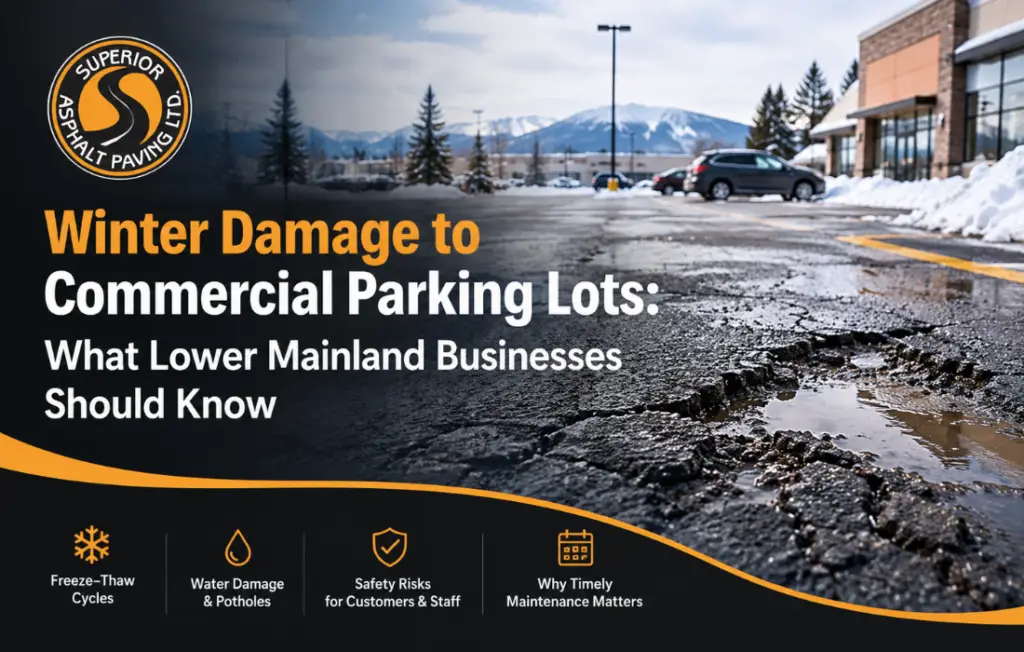
Winter in the Lower Mainland can be challenging for commercial parking lots. Although the region typically experiences milder winters than many parts of Canada, repeated rain, freezing temperatures, occasional snow, ice, and temperature fluctuations can place significant stress on asphalt surfaces.
For businesses, winter parking lot damage is more than a pavement issue. Potholes, cracks, standing water, uneven surfaces, and accumulated snow can affect accessibility, vehicle movement, customer experience, and ongoing maintenance costs.
Understanding how winter affects asphalt and taking preventative action before small problems become major repairs can help Lower Mainland businesses protect their pavement investment.
How Winter Weather Damages Commercial Parking Lots
One of the biggest threats to asphalt during winter is the combination of moisture and temperature changes. According to the BC Ministry of Transportation and Infrastructure, water entering pavement structures can freeze and expand, contributing to frost heave, pavement distortion, and cracking.
Commercial parking lots can be particularly vulnerable because they experience frequent vehicle traffic and often contain drainage areas, entrances, loading zones, and high-use sections.
1. Freeze-Thaw Cycles Can Cause Cracks
When water enters existing cracks or weak areas in asphalt and temperatures drop, the trapped moisture can freeze and expand. When temperatures rise again, the water thaws and leaves behind additional space.
Repeated freeze-thaw cycles can gradually enlarge existing cracks and weaken the pavement structure.
This is why a small crack that appears insignificant before winter can become a much larger repair problem after several cycles of freezing and thawing.
2. Potholes Can Develop Quickly
Potholes often form when moisture penetrates damaged asphalt and repeated temperature changes weaken the underlying pavement.
Once a weakened area is exposed to regular vehicle traffic, tires can break apart the compromised surface. Heavy delivery trucks, commercial vehicles, and frequent customer traffic can accelerate deterioration.
Common warning signs include:
- Small surface depressions
- Cracks surrounding damaged areas
- Loose asphalt
- Standing water
- Expanding potholes
- Uneven driving surfaces
Addressing these problems early can help businesses avoid more extensive pavement reconstruction.
3. Poor Drainage Makes Winter Damage Worse
Water management is one of the most important aspects of asphalt preservation.
If rainwater and melting snow cannot drain properly, moisture can remain around or beneath the pavement. The BC Ministry of Transportation notes that improving drainage can be an effective way to reduce frost-heave-related pavement problems.
Businesses should pay particular attention to:
- Parking lot drains
- Catch basins
- Low-lying areas
- Parking lot edges
- Entrance and exit areas
- Areas where water regularly pools
Standing water should not be ignored, especially when temperatures are expected to fall.
4. Snow and Ice Can Create Operational Problems
Snow accumulation isn’t only a pavement concern. It can make parking areas difficult to navigate and reduce visibility around entrances, pedestrian routes, parking spaces, and loading areas.
Professional snow clearing and ice management can help maintain access during winter events. BC government winter maintenance standards, for example, include snow removal, anti-icing, abrasives, and post-season cleanup as components of winter maintenance operations.
For commercial property owners, the goal should be to keep essential areas accessible while minimizing the opportunity for snow and ice to create additional pavement problems.
5. Snow Plowing Can Affect Asphalt
Snow removal equipment is necessary for many commercial properties, but improper operation can contribute to surface damage.
Aggressive scraping, poorly adjusted blades, and equipment operating over deteriorated asphalt can worsen existing cracks, potholes, and damaged edges.
A professional approach should account for:
- Existing pavement conditions
- Parking lot layout
- Drain locations
- Curbs and pavement edges
- High-traffic areas
- Snow storage locations
- Pedestrian access
Planning these details before a major winter event can make snow clearing more efficient and reduce unnecessary stress on the pavement.
Why Winter Maintenance Matters for Lower Mainland Businesses
A proactive maintenance program is generally easier to manage than waiting until winter damage becomes extensive.
For Lower Mainland businesses, winter maintenance and snow removal should be considered part of a broader pavement preservation strategy rather than simply an emergency response after snowfall.
This can include:
- Pre-winter pavement inspections
- Crack sealing where appropriate
- Pothole repairs
- Drainage inspections
- Snow and ice management planning
- Regular monitoring during severe weather
- Post-winter pavement assessments
Superior Asphalt Paving Ltd. provides commercial parking lot paving, repairs, resurfacing, maintenance, and winter services throughout the Lower Mainland.
What Businesses Should Inspect Before Winter
A pre-winter inspection can identify problems while they are still manageable.
Look for:
Cracks
Pay attention to longitudinal, transverse, edge, and interconnected cracking. Cracks allow water to penetrate the pavement structure and should be assessed before prolonged winter exposure.
Potholes
Even small potholes can expand under repeated vehicle loading and changing weather conditions.
Drainage Problems
Check whether catch basins and drainage paths are clear and whether water remains on the parking surface after rainfall.
Uneven Pavement
Depressions and settled areas can collect water and become more problematic when temperatures fluctuate.
Damaged Edges
Parking lot edges can deteriorate when vehicles repeatedly drive or park beyond the supported pavement area.
A Practical Winter Parking Lot Maintenance Plan
Businesses can use a simple seasonal approach to protect their parking areas.
Before Winter
Inspect the pavement and repair significant cracks, potholes, drainage issues, and other visible defects.
During Winter
Monitor the property after snow, freezing rain, and significant temperature changes. Keep key access routes clear and address developing hazards promptly.
After Winter
Conduct another pavement inspection. Look for new potholes, cracks, drainage problems, surface deterioration, and areas affected by snow removal activities.
Before the Next Paving Season
Prioritize repairs based on severity and traffic conditions. Some areas may only require localized repairs, while extensively deteriorated pavement may require resurfacing or replacement.
When Should a Commercial Parking Lot Be Repaired?
There is no single timeline that applies to every parking lot. The right approach depends on pavement age, drainage, traffic levels, construction quality, climate exposure, and the severity of existing damage.
However, businesses should consider professional assessment when they notice:
- Numerous potholes
- Widespread cracking
- Repeated drainage problems
- Severe surface deterioration
- Large areas of standing water
- Uneven pavement
- Damaged parking lot edges
- Recurring repairs in the same locations
Early intervention can help prevent localized problems from spreading into larger pavement failures.
How Superior Asphalt Paving Can Help
Superior Asphalt Paving Ltd. is a family-owned asphalt paving company serving the Lower Mainland with more than 40 years of experience. The company provides commercial parking lot paving, repairs, resurfacing, maintenance, and winter services.
Its services include parking lot installation, repair, resurfacing, maintenance and sealcoating, along with professional snow removal and ice management.
Superior paving also manufactures its own asphalt, giving the company greater control over material production and project quality.
For businesses preparing for the winter season, a professional pavement assessment can help identify vulnerable areas and determine which maintenance measures should be completed before severe weather arrives.
Protect Your Commercial Parking Lot Before Winter
Winter damage doesn’t always happen overnight. In many cases, deterioration develops through a combination of existing pavement defects, moisture, temperature changes, drainage problems, and repeated vehicle traffic.
A proactive approach to winter maintenance snow removal can help Lower Mainland businesses keep parking areas functional while reducing the risk of avoidable pavement deterioration.
If your commercial parking lot has cracks, potholes, drainage issues, or other signs of deterioration, consider having it assessed before winter conditions become more challenging.
Superior Asphalt Paving Ltd. serves businesses throughout the Lower Mainland with commercial paving, asphalt repair, maintenance, resurfacing, and winter services. Request a professional assessment and plan your parking lot maintenance before winter damage becomes a larger expense.
FAQs
How does winter weather damage commercial parking lots?
Freezing temperatures, moisture, rain, snow, and repeated freeze-thaw cycles can cause cracks to expand, weaken asphalt, create potholes, and contribute to drainage problems.
Can snow removal damage an asphalt parking lot?
Yes. Improperly operated snowplows or equipment can worsen existing cracks, potholes, and damaged pavement edges. Professional snow clearing helps minimize unnecessary surface damage.
When should businesses prepare their parking lots for winter?
Ideally, inspect and maintain the parking lot before winter begins. Repairing cracks, potholes, drainage issues, and other defects early can help reduce deterioration during winter weather.
How can businesses prevent winter damage to asphalt parking lots?
Regular inspections, timely crack and pothole repairs, proper drainage, snow clearing, ice management, and post-winter assessments can help protect commercial asphalt surfaces.
What should businesses do if winter causes significant parking lot damage?
Have the pavement professionally inspected to determine whether localized repairs, resurfacing, maintenance, or full replacement is appropriate. Addressing damage promptly can help prevent further deterioration.